Owner & Founder
Date Published: 8/12/2026
Search Optimized Marketing isn’t just some fancy buzzword that marketers toss around to sound important, it’s basically your business’s cheat code for being found online. Imagine your potential customers are treasure hunters, and your website is the treasure map. Except instead of an “X” marking the spot, you’ve got keywords, meta tags, and a sprinkle of SEO magic guiding them straight to you. Without it? They’re probably wandering aimlessly through the vast, unforgiving jungle of the internet, clicking on your competitor’s link instead. Brutal, right?
Here’s the deal: it’s not about stuffing your website with random words like a Thanksgiving turkey. It’s about making your business look so irresistible to search engines that they can’t help but rank you higher. Done right, Search Optimized Marketing makes you the belle of the Google ball, showing up when it matters most. And let’s be real, when your dream customer is searching for a service or product at 2 a.m., you definitely want your business to be the first thing they see, right after their regret for staying up so late.
Alright, let’s talk keywords, those magical little phrases that can make or break your online presence. Think of them as the matchmaking service between your business and your future customers. You’ve got what they need; you just need the right words to help them swipe right. Start by putting yourself in their shoes (or maybe their slippers, since most people are Googling from the couch). What are they typing into the search bar when they’re looking for someone like you? Spoiler alert: it’s probably not “best darn business ever” no matter how much you love your tagline.
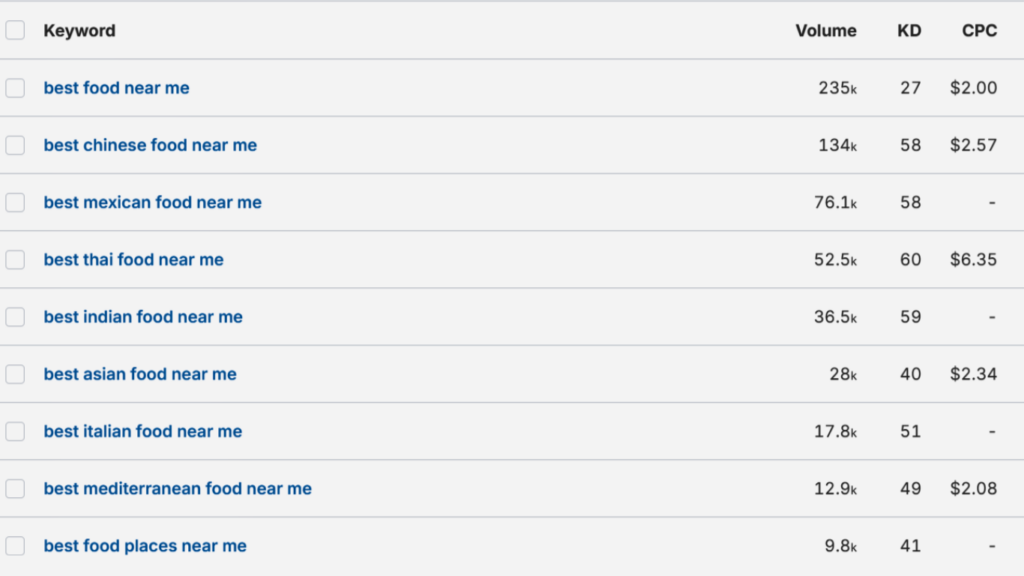
Lucky for you, there are tools that can do the heavy lifting, Google Keyword Planner, SEMrush, or even Ubersuggest. These bad boys help you figure out which keywords are getting clicks and which ones are as useful as a screen door on a submarine. The trick is to find words with decent search volume and low competition, basically, the Goldilocks of keywords. Bonus points if you can work in location specific terms for all your local fans. Oh, and don’t forget to check out what your competitors are ranking for. Nothing wrong with a little friendly sabotage, right?
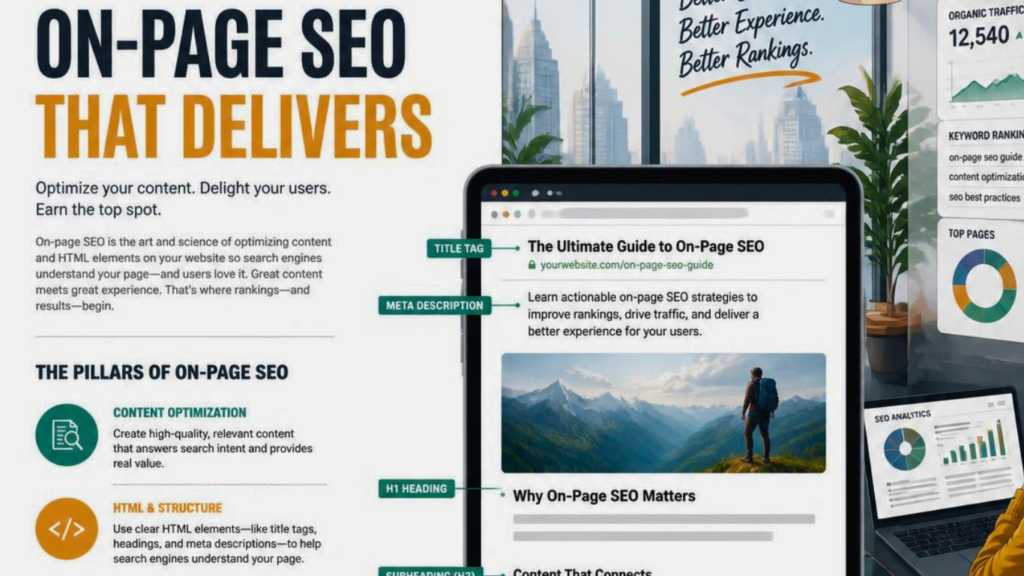
Alright, let’s get into the nitty gritty of on page SEO, basically, the art of making your website so attractive to search engines that they can’t help but swipe right. First up, meta tags. These little snippets are like the elevator pitch for your page, short, snappy, and convincing enough to make Google say, “Yep, this one’s a keeper.” Then there’s your headings. Think of them as signposts for your readers and search engines. They should guide, not confuse. No one’s here for the Da Vinci Code of web pages.
Now, let’s talk content. Your words need to do more heavy lifting than a bodybuilder at a championship. Create content that’s engaging, relevant, and sprinkled with those keywords you so lovingly researched, just don’t go overboard or you’ll sound like a broken robot. Don’t forget images either. Add alt-text, so even search engines know that’s a glorious shot of your handmade artisan donuts, not just “image123.jpg.”
Lastly, keep it mobile friendly. If your site is slower than someone trying to parallel park for the first time, you’re losing visitors faster than you can say “SEO.” Seriously, speed matters, and your audience isn’t here to play the waiting game.
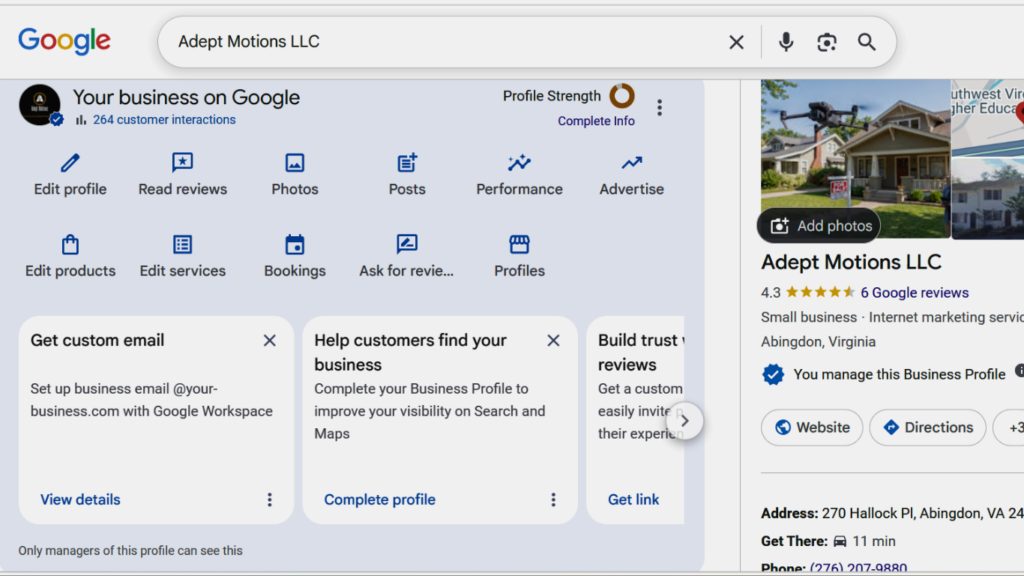
Picture this: someone’s strolling around your neighborhood, phone in hand, desperately searching for “best tacos near me” because their stomach is growling louder than their car engine. Enter local SEO, your not so secret weapon for getting found by hungry humans (or caffeine deprived zombies) in your area. First things first, claim your Google My Business profile like it’s the last seat on a crowded subway. Fill it with drool worthy photos, updated hours, and a description that makes you sound like the superhero of your industry. Bonus points for encouraging those precious five-star reviews, because let’s face it, nothing screams “trustworthy” like Susan from three blocks away raving about your service.
Next, make sure your NAP (name, address, phone number) is consistent across the web. It’s not a typo contest, people. Join local directories, like Yelp or whatever hyper specific forum your town’s Facebook moms are obsessed with this week. Oh, and don’t forget about location specific keywords. Slide them into your website content like secret ingredients in grandma’s recipe, just enough to make it irresistible but not overwhelming. Because when it comes to local SEO, you’re not just competing; you’re playing to win the digital popularity contest.
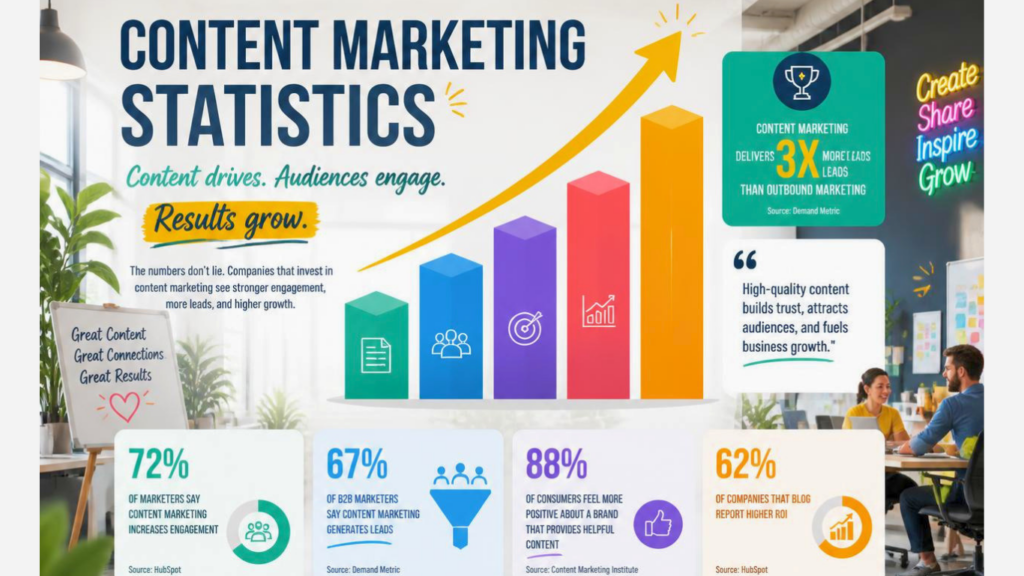
Content marketing is like throwing a party, except instead of streamers and cake, you’re serving up blog posts, videos, and maybe a meme or two (because who doesn’t love a good laugh?). The goal? To get people talking about you, in a good way. Share your expertise, answer those burning questions your customers didn’t even know they had, and do it all in a way that makes you unforgettable. Think of your content as your business’s digital karaoke performance. Whether it’s a show stopping ballad or a fun, catchy tune, you want people clapping, not cringing.
But here’s the kicker: consistency is key. If you’re posting once in a blue moon, don’t expect search engines (or people) to remember you. Stay active, stay relevant, and don’t be afraid to show some personality, yes, even if that means sharing that embarrassing behind the scenes fail (we’ve all been there). Oh, and make it shareable. The more your content gets passed around, the more eyeballs land on your business. Just make sure those eyeballs are from your target audience and not, like, your mom’s book club.
Backlinks are like the social proof of the internet, basically, your website’s way of saying, “Look, other cool kids think I’m awesome too!” But not all backlinks are created equal. A link from a reputable website is like getting a high five from a celebrity, while a sketchy link is more like a handshake from someone who forgot to wash their hands. Aim for the high fives, okay?
To score those golden links, you’ll need to get a little creative. Start by pitching guest blog posts to industry sites, show off your expertise and casually drop a link back to your site like it’s no big deal. Partner up with influencers or collaborate with other businesses for mutual shout outs. And if you’re feeling spicy, create irresistible content that others can’t help but link to, like a clever infographic or a guide that answers every burning question in your industry.
Oh, and don’t fall for those spammy “buy 1,000 backlinks for $10” schemes. That’s like putting glitter on garbage, it might catch someone’s eye at first, but it’s going to cause a mess later. Stick to quality over quantity, and your website’s reputation will thank you.
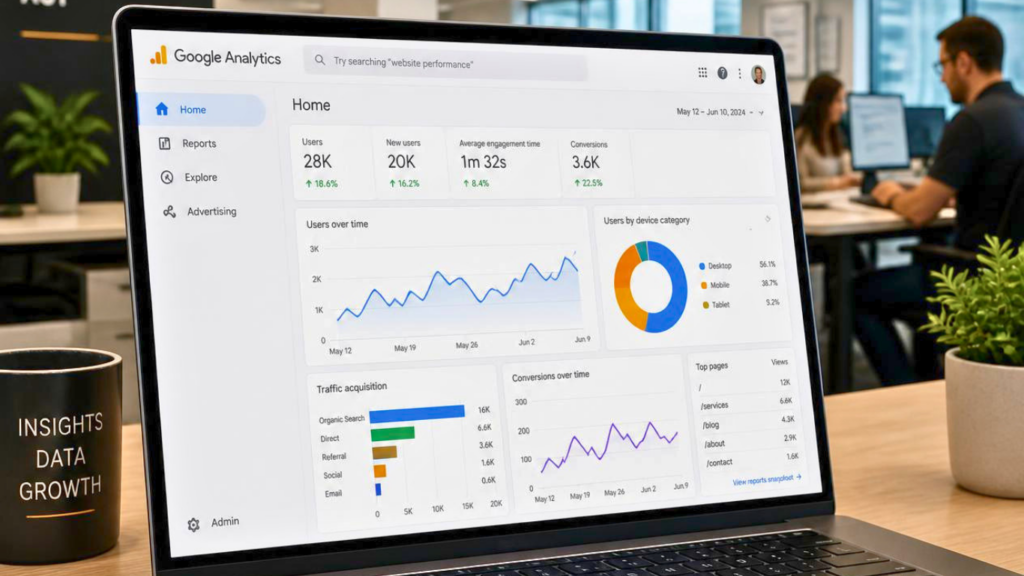
So, you’ve got your SEO game face on, and your site is sparkling brighter than a freshly waxed car, but how do you know if it’s actually working? Enter analytics, your digital crystal ball. Tools like Google Analytics, SEMrush, or Ahrefs are basically your personal detectives, uncovering clues about what’s driving traffic and what’s flopping harder than your cousin’s garage band.
Keep an eye on metrics like organic traffic, bounce rates, and click-through rates (CTR). If visitors are showing up but leaving faster than you at a mandatory work meeting, it’s time to dig deeper. Maybe your content needs some pizzazz, or your page load speed is slower than molasses in January. And don’t forget those precious keywords, are they crushing it or crying in a corner?
Oh, and here’s a fun one: heatmaps. They let you see where visitors are clicking (or not) on your site. It’s like a treasure map, except instead of gold, you’re finding out why everyone ignores that “Sign Up Now” button you spent hours designing. Bottom line? Stay curious, track everything, and let the data tell you whether you’re SEO royalty or just a court jester.
Alright, let’s dive into IoT, because apparently, even your coffee maker is smarter than most of us now. Integrating IoT with your website marketing strategy isn’t just about showing off your tech savvy side (although, let’s be honest, it’s a nice flex). It’s about creating experiences so personalized and seamless that your customers will think you’ve hired a mind reader. Imagine sending tailored discounts to someone’s smartwatch as they stroll past your store or using data from smart devices to predict what your customers need before they even know it themselves. Creepy? Maybe a little. Effective? Absolutely.
And here’s the kicker: IoT doesn’t just help you understand your customers better; it makes your brand unforgettable. From interactive product displays to connected loyalty programs, IoT can turn casual shoppers into lifelong fans faster than you can say “Wi-Fi enabled toaster.” Sure, it sounds futuristic, but trust us, this is where marketing is headed. So, strap on your tech goggles and get ready to ride the IoT wave, you don’t want to be the only business left stuck in the dial-up era.
As you can now see, implementing search optimized marketing into your current marketing strategy is a must if you want to compete in the future. Having your company’s website stand out in the search engines is a must if you do not want to fall behind your competitors.
For more information on search optimized marketing, be sure to read our following related articles. Also, don’t forget to check out our most asked questions with answers about search optimized marketing below.
Search optimized marketing focuses on refining your online presence to ensure your business ranks higher in search engine results. By tailoring strategies to align with search engine algorithms, you can attract more relevant traffic to your website.
This approach combines the use of strategic keywords, high-quality content, and technical optimizations to help your business stand out. For industries utilizing cutting edge technologies, like IoT-enabled smart buildings, search optimization provides an opportunity to connect with a highly specific and interested audience.
SEO for IoT-enabled smart buildings requires a tailored approach to address the unique complexities of advanced technology integration. With countless data points and specialized terminology, it’s essential to focus on niche specific keywords and ensure technical precision.
Prioritizing mobile friendly website design, fast loading pages, and structured data enhances visibility while catering to both users and search engines. By aligning your search optimized marketing strategy with the technological sophistication of IoT, you can effectively capture the attention of your target audience.

Effective SEO combines strategic keyword use, engaging content, and technical optimizations like proper meta tags and responsive design. Off page strategies, such as earning quality backlinks and fostering social media interactions, also play a crucial role. For specialized industries, aligning SEO efforts with niche specific needs ensures your website reaches and resonates with the right audience.
Use keyword research tools like Spyfu or SEMrush to uncover terms relevant to your industry. Focus on a mix of broad and niche specific keywords that align with your audience’s search intent. Analyze competitors and monitor trending phrases to refine your list, ensuring your strategy remains adaptable to industry changes and evolving search behaviors.
Creating valuable, informative content tailored to your audience’s needs can significantly improve your search rankings. Focus on producing diverse formats like blog posts, marketing videos, and guides that address specific challenges in your industry. High quality, relevant content not only engages readers but also helps search engines recognize your site as a trusted resource.
Track metrics like keyword rankings, organic traffic, and user engagement with tools like Google Analytics. Pay attention to click through rates and time spent on your site to gauge content effectiveness. Regularly review these insights to fine tune your strategy, ensuring it aligns with audience needs and adapts to changing search trends.
Overlooking the importance of clear site navigation and user experience can hinder your SEO efforts. Ensure your website is intuitive and easy to explore, as search engines value user friendly designs. Additionally, failing to optimize for local search can limit your reach. Pay attention to location specific keywords and maintain accurate business information across directories.