Owner & Founder
Date Published: 7/1/2026
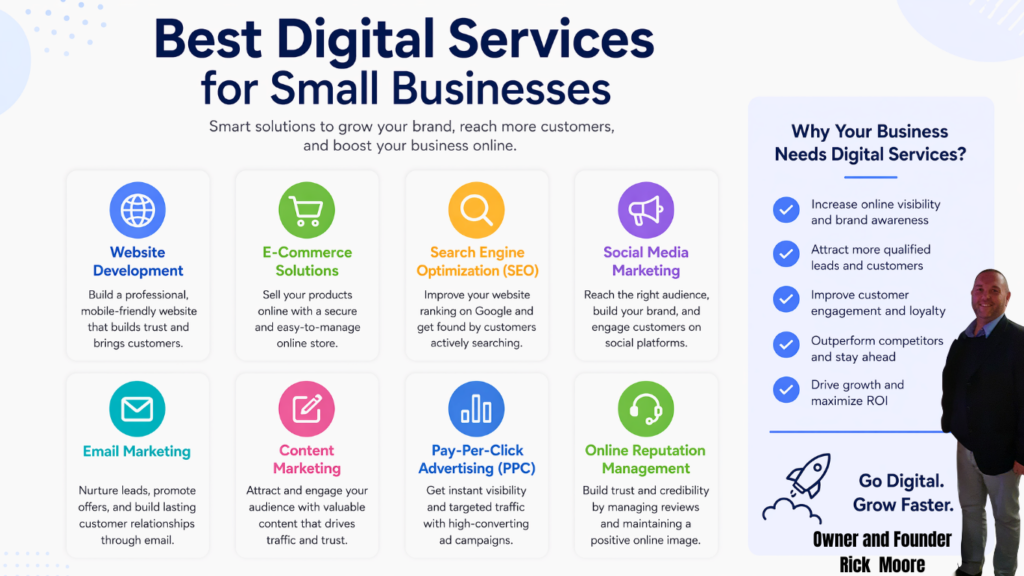
Digital services: the secret sauce that can turn your small business from “just okay” to “holy smokes, look at them go!” Think of it as the ultimate toolbox filled with all the gadgets you didn’t know you needed but now can’t live without. Whether it’s automating tedious tasks or giving you superhuman levels of customer insight, digital services are like your business’s fairy godmother, minus the questionable outfit and unsolicited pumpkin transformations.
Running a small business without leveraging digital tools these days is like showing up to a snowstorm in flip flops, not exactly ideal. From managing online sales to keeping your social media game on point, digital services are here to do the heavy lifting so you can focus on more important things, like figuring out what to name your next product (or finding out who keeps finishing the office snacks).
The beauty of these tools is their ability to level the playing field. They give small businesses access to resources that were once reserved for the big leagues. Now, even the tiniest mom and pop shop can automate workflows, build an online presence, and engage with customers like a pro.
Sure, getting started might feel a little like stepping into a tech jungle, but don’t worry, you don’t need to be a computer wizard to make it work. With so many user-friendly options out there, your small business could be on its way to internet stardom faster than you can say, “Do I really need another subscription service?” Spoiler: You probably do.
E-commerce platforms are like the dating apps of the business world, except instead of swiping right on questionable profiles, you’re setting up an optimized website aka, digital shop that (hopefully) doesn’t ghost your customers. These platforms let you sell your products online, manage your inventory, and avoid the logistical nightmare of trying to track orders with a spreadsheet named “FINAL_FINAL_v2.”
First up is Shopify, the all-star of the e-commerce universe. It’s so user-friendly that even your tech averse uncle could probably set up a store without calling you for help (though he still might). Then there’s WooCommerce, which is basically WordPress’s ride or die. If you’re a fan of tinkering and customizing everything down to the last pixel, this one’s for you. BigCommerce is another heavy hitter, geared toward those who want enterprise level tools without the enterprise level headaches.
These platforms all come packed with features to help you impress your customers while secretly wondering how you’re pulling it all off. Think sleek, customizable storefronts, integrations galore, and payment options that won’t leave your buyers wondering if they’re funding a secret island lair. And let’s not forget mobile compatibility, because apparently, people can’t even buy socks without doing it on their phones now.
Choosing the right one might feel overwhelming, but hey, at least you’re picking an e-commerce platform and not a baby name. Way less pressure.
Managing social media for your business can feel like trying to herd cats hopped up on espresso. Enter social media marketing tools, the magical wands that turn chaos into something resembling a strategy. With these tools, you can schedule posts like a pro, respond to comments before they spiral into a digital shouting match, and even analyze what’s working (and what’s a total flop).
Hootsuite is the seasoned veteran of digital services, letting you juggle multiple platforms without breaking a sweat, or your laptop. Buffer is perfect if you want something simple, clean, and not trying to upsell you every five minutes. Sprout Social, on the other hand, is for data lovers who enjoy getting their hands dirty with analytics dashboards that tell you exactly why no one liked that post about your cat wearing sunglasses.
And for those who like to keep things spicy, there’s Later, a visual first tool that’s basically made for Instagram and Pinterest fans. Canva even jumps into the mix with its content scheduler, so you can design high-quality content, post, and still have time to complain about algorithms.
Basically, these digital services tools help you do all the fun, creative stuff without drowning in spreadsheets or constantly Googling “best times to post on Twitter.” Because let’s face it, the only thing worse than ignoring social media is doing it badly.
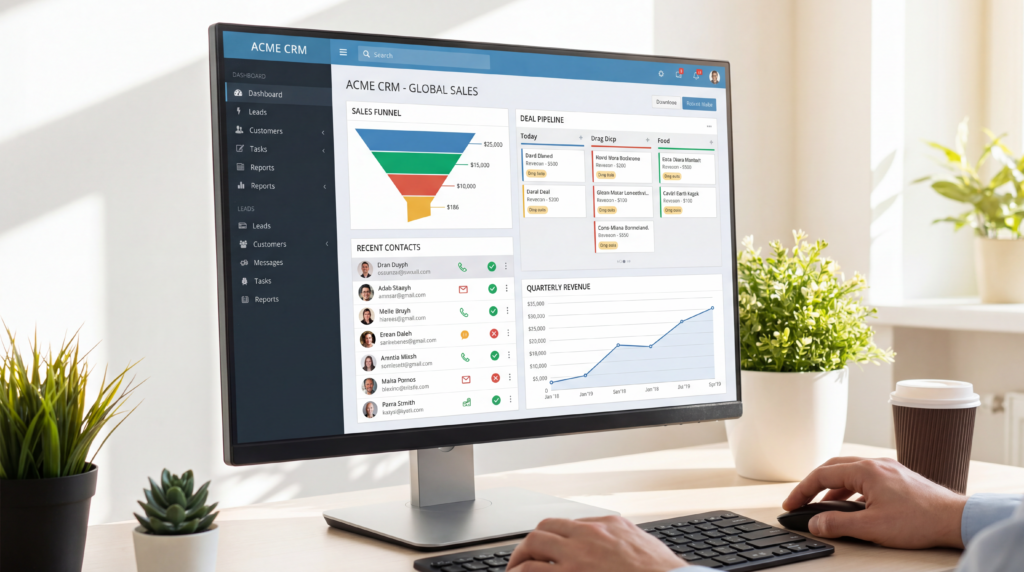
Ah, CRM software, the not-so-secret weapon that saves you from running your business with a stack of sticky notes and an inbox that looks like a war zone. Think of it as the digital services assistant you always wished you had, minus the coffee runs and awkward small talk. It’s here to help you track every customer interaction, remember that one client who only buys on Tuesdays, and maybe even keep you from accidentally calling someone by the wrong name.
Salesforce is the granddaddy of them all, packed with more features than you’ll probably ever use but nice to have just in case you decide to rule the CRM universe. HubSpot CRM is the more chill option, perfect for anyone who likes free stuff and a platform that doesn’t require a 400-page manual to figure out. Then there’s Zoho CRM, which is like the thrifty sibling, budget friendly without being boring or basic.
Whether you’re sending follow up emails, tracking sales leads, or just trying to look like you actually know what you’re doing, these tools have your back. They’re here to make sure your customers feel special while you pretend you’re not googling “how to personalize emails without sounding creepy.” Welcome to the era of looking professional with half the effort.
Email marketing: the OG of digital communication. Sure, your inbox might already look like a digital landfill, but when done right, email marketing is still one of the most effective ways to connect with your audience. Plus, it’s way less awkward than cold calling someone during dinner.
Enter email marketing platforms, your trusty sidekicks in the quest to craft campaigns that don’t end up in the spam folder. Mailchimp is the reigning champ, known for its drag and drop ease and the occasional witty quip that makes you forget you’re working. It’s perfect for anyone who wants professional looking emails without spending 12 hours learning HTML.
Then there’s Constant Contact, which is great for folks who just want to keep things simple. It’s like the no nonsense friend who shows up on time and doesn’t overcomplicate brunch plans. Meanwhile, ConvertKit is perfect for content creators who want to build relationships instead of just blasting promotions. It’s basically a matchmaker for your email list, helping you nurture leads like a doting parent at a science fair.
These tools make sending newsletters, promotions, or those overly enthusiastic “Happy Holidays!” emails a breeze. They also help you track who’s opening, clicking, or ignoring you entirely, so you can adjust your strategy without feeling like you’re shouting into the void.
Look, if your business isn’t equipped to take payments online, it’s basically living in the Stone Age, except with less fire and more frustrated customers. Online payment solutions are here to save the day, ensuring your customers can give you their money without wondering if their credit card info is about to star in its own cybercrime documentary.
PayPal is the veteran in the room. It’s been around so long, you’d think it was collecting a pension, but it’s still a solid choice for simple and secure transactions. Then there’s Stripe, the customizable wonder child of online payments. It’s perfect for those who want to tweak every little detail and don’t mind feeling like a part-time coder. And let’s not forget Square, the multitasking champ that’s just as comfortable processing payments at a farmer’s market as it is on your website. It even throws in some sleek hardware for those times you need to swipe a card in real life, because, shockingly, not everyone has embraced the digital wallet trend yet.
With options like these, your customers can buy what they want, when they want, and from whichever device they’re glued to. The only downside? No more “the check is in the mail” excuses when it comes to overdue payments.
So, there you have it, digital services are basically the cheat codes for small business growth. And no, you don’t need to be some tech prodigy to get started. From selling stuff online to keeping your inbox under control, these tools help you do more with less sweat (and fewer late-night panics).
As for the future? Let’s just say 2026 is shaping up to be full of surprises. We’re talking AI so smart it might start offering you business advice (whether you asked for it or not) and virtual reality experiences that optimize your online shop and make it feel like a theme park. And who knows? Maybe someone will invent a tool that emails customers back for you while also fixing your printer, dare to dream.
The bottom line? Digital tools aren’t going anywhere, and neither is the competition. Jump on board now, and by the time these futuristic trends hit, you’ll be way ahead of the game. Or at the very least, you’ll have way cooler software to complain about when things inevitably go haywire. Either way, the digital world is yours for the taking, just don’t forget to hit “save.”
For more online marketing tips be sure to read our related articles. Also, don’t forget to check out our most asked questions with answers about the best digital services to use to help your small business grow.
Selecting accounting software that fits your needs can simplify managing your business’s finances. Platforms like QuickBooks and FreshBooks offer intuitive tools for tracking expenses, creating invoices, and generating reports. These systems are designed to streamline financial tasks, helping you stay organized and focused on other priorities. With features tailored for small businesses, they reduce manual work and minimize errors, making it easier to maintain accurate records.
Managing customer relationships effectively can make a big difference in growing your business. CRM tools like Salesforce and HubSpot offer features to organize customer data, track interactions, and automate tasks such as follow-ups and email campaigns.
These platforms allow you to stay connected with your customers and provide tailored experiences based on their preferences. By streamlining communication and keeping everything in one place, you can better understand your customers’ needs and improve overall satisfaction. Additionally, these tools are scalable, meaning they can grow with your business, ensuring they remain valuable as your customer base expands.
Utilizing the right digital marketing tools can help your business connect with the right audience and enhance engagement. Platforms like Google Ads enable targeted advertising, ensuring your products or services reach potential customers at the right time. Similarly, Mailchimp simplifies email marketing by providing user-friendly templates and automation options to create professional campaigns.
These tools empower you to create personalized and effective strategies without requiring extensive marketing expertise. By incorporating digital marketing services into your operations, you can build stronger connections with your audience and increase your brand’s visibility in a competitive online landscape.
Tools like Trello and Asana simplify managing tasks and team collaboration. They provide visual boards, timelines, and calendars to help break down projects into smaller, actionable steps. Features such as task assignments and status updates keep everyone on the same page, reducing miscommunication and delays.
These platforms also support file sharing and integrations with other apps, ensuring your workflow remains seamless. By using these tools, you can prioritize tasks, monitor progress, and adapt plans as needed, creating a more organized and productive work environment.

Cloud storage solutions ensure your business data is accessible and secure. Platforms like Google Drive and Dropbox provide reliable options for storing and sharing files effortlessly. These services support team collaboration by enabling real time updates and file syncing across devices.
With automated backups, they help safeguard your information against unexpected data loss, giving you peace of mind. Cloud storage also offers scalable options, allowing your storage needs to grow alongside your business without added complexity.