Drones in Construction: A Coworker That Doesn’t Complain

Picture of Author: Rick Moore

Author: Rick Moore

Owner & Founder of Adept Motions
Date Published: 8/28/2025

Drones In Construction Industry
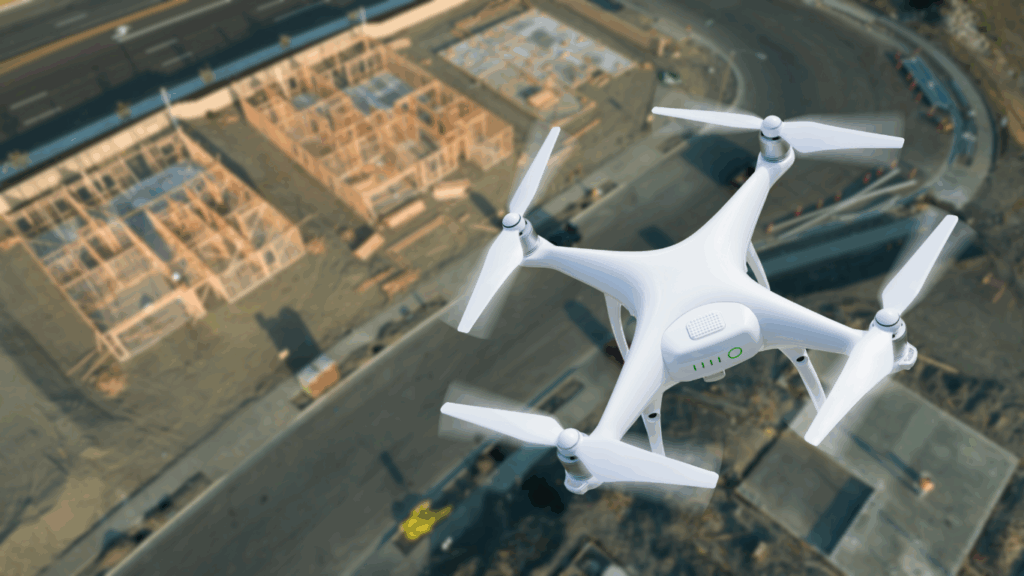
Drone Being Used in Construction Project

Introduction to Drones in Construction

The construction industry isn’t exactly known for being cutting-edge when it comes to technology—unless you count duct tape as a breakthrough. But guess what? Times are changing, and drones are crashing the party (figuratively, we hope). These high-tech flying contraptions are shaking things up faster than your favorite power drill on turbo mode. Imagine a new coworker who doesn’t need coffee breaks, won’t call in sick, and isn’t likely to start a heated debate about what qualifies as a sandwich. Sounds dreamy, right?

From the moment they hit the scene, drones have been stealing the spotlight. Need a bird’s-eye view of a site? Done. Want to capture high-quality images without strapping a GoPro to your coworker? Easy. These little overachievers are making tasks quicker, simpler, and—dare we say it—kind of fun. Sure, they don’t laugh at your bad jokes or join you for Taco Tuesday, but they make up for it by being ridiculously useful.

The best part? You don’t have to deal with any back-and-forth email threads or passive-aggressive post it notes from them. Drones get the job done, no drama included. They’re the coworker you wish you had all along: efficient, hardworking, and blissfully silent.

Enhancing Surveying and Mapping

Surveying and mapping used to be the kind of task that made you question all your life choices. You’d be out there, sweating buckets, trying to measure a site while wrestling with equipment that looks like it belongs in a 19th-century museum. But now? Drones have come in like the cool kid who aced every test without trying. These flying geniuses collect data with the kind of precision that would make your geometry teacher cry tears of joy.

Need to map out a massive area without breaking a sweat? No problem. When using drones in construction you can zip around like they’ve got somewhere better to be, gathering data in a fraction of the time it used to take. Plus, they don’t need lunch breaks or motivational speeches to get the job done. And let’s not forget about the quality of the data they provide. We’re talking razor-sharp visuals and pinpoint accuracy, not the “close enough” measurements you used to get when someone eyeballed it from across the lot.

And the best part? You don’t have to deal with angry raccoons, surprise mud pits, or awkward stares from a passing herd of cows while you’re out there. Just send the drone up, and it’ll do all the hard work while you sip on your coffee and pretend you’re busy. It’s like having a personal assistant who doesn’t roll their eyes when you ask them to double-check something.

Boosting Site Monitoring and Safety

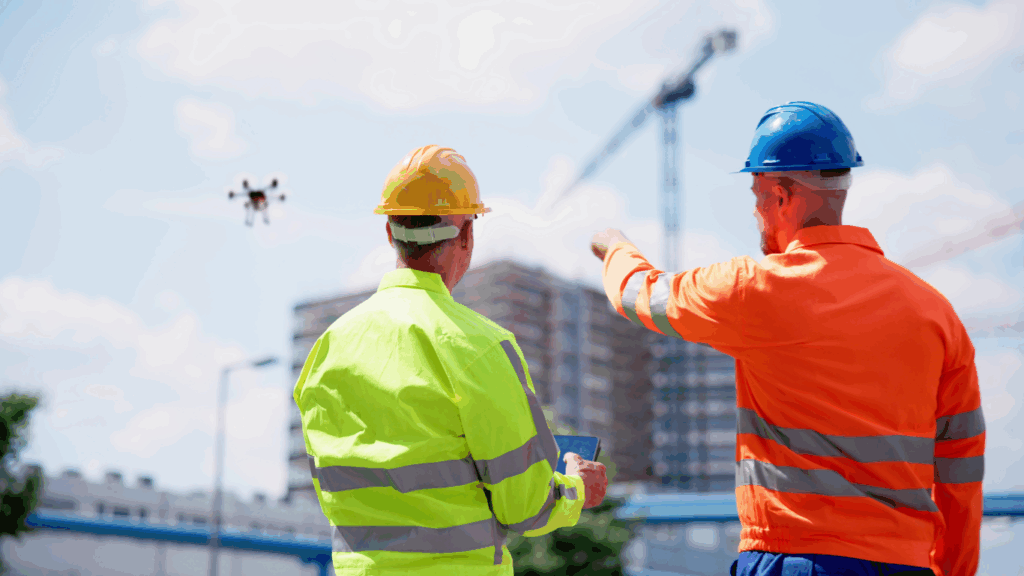
Drone Being Used for Construction Site Monitoring and Surveying

Let’s face it: keeping an eye on a construction site is like trying to watch over a pack of toddlers armed with power tools. Things get messy, and fast. But drones? They’re the ultimate babysitters—minus the juice boxes and nap times. They hover above it all, capturing every angle and catching the mistakes before your boss does. And guess what? They don’t need hazard pay for dodging flying debris or sidestepping the one guy who insists on “winging it” without the blueprints.

With drones in construction, you can monitor progress and ensure safety without breaking a sweat—or your ankle. They’re like your personal spies in the sky, but way less creepy. Whether it’s spotting that precarious stack of materials teetering like a game of Jenga or ensuring the team isn’t “creatively interpreting” the safety manual, drones are on it. They’ve got that hawk-eye view of everything going on, so you don’t have to risk life and limb playing detective.

And the best part? No more climbing scaffolding or awkwardly hanging out in a harness just to check on progress. Instead, you’re planted firmly on the ground, scrolling through crystal-clear footage while sipping a latte like the construction site VIP you were born to be.

Cost and Time Efficiency

Drones Help Save On Construction Costs

Look, no one wants to spend extra cash or time on a project—unless you’re secretly in love with budget overruns and extended deadlines (in which case, maybe this isn’t for you). Enter drones in construction, the ultimate multitasking machines that don’t need coffee breaks or workers’ comp. These flying marvels are making construction projects more efficient than a pizza delivery app on a Friday night.

Remember those days when you’d hire a small army to inspect a site, shuffle paperwork, and drag out timelines like it’s an Olympic sport? Drones are here to save you from all that chaos. They streamline operations by cutting down on manpower and wrapping up tasks quicker than your team can argue over whose turn it is to grab lunch. Data collection, progress tracking, inspections—you name it, they handle it faster than anyone with two feet ever could.

And let’s talk about money, because let’s face it, no one’s rolling out drones just for the Instagram photo ops. Reducing on-site hours and minimizing downtime means fewer dollars flying out of your wallet. Need to survey an area? Done in minutes, not days. Inspections? Forget the scaffolding rental; drones have you covered. They even help you dodge costly mistakes—because nothing says “budget buster” like redoing a project someone eyeballed wrong the first time.

Oh, and downtime? Practically nonexistent. Drones don’t call in sick or mysteriously disappear right before the big deadline. They just zip around, doing their thing, all while keeping your wallet and calendar happier than ever. So, go ahead, let drones do the heavy lifting—literally and figuratively—while you enjoy the glory of staying on schedule and under budget.

Environmental Impact and Sustainability

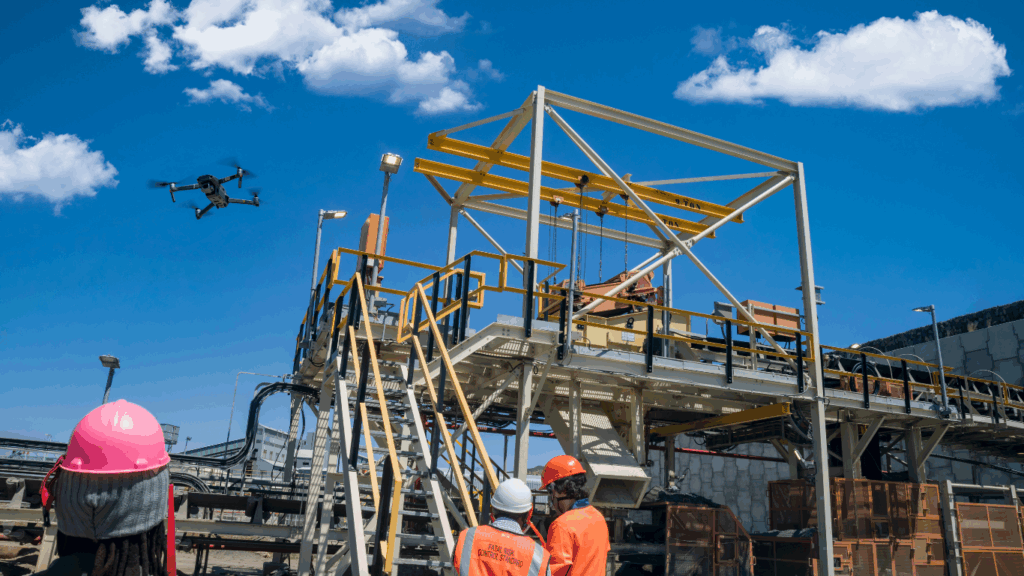
Industrial Drone Inspection
Industrial Drone Inspection Being Performed

Construction sites aren’t exactly known for being gentle on the environment—bulldozers, dust clouds, and the occasional oil spill don’t exactly scream “eco-friendly.” But enter drones in construction, swooping in like tiny, battery-powered saviors. These little buzzers are helping construction companies ditch some of the old-school, heavy-footprint methods that made Mother Nature roll her eyes. Instead of ripping up land to get a decent view or lugging around gas-guzzling machinery for inspections, drones handle it all with the grace of a ballerina and the efficiency of, well, a drone.

By cutting down on the need for traditional surveying equipment and big, clunky vehicles, drones reduce emissions and minimize the disruption to local wildlife. Picture this: no more scaring off every bird within a five-mile radius just to mark out a new project. Plus, drones in construction don’t exactly guzzle fuel like your average construction truck, which means fewer greenhouse gases floating around. They might not wear capes, but these flying gadgets are quietly reducing the carbon footprint of construction sites, one battery charge at a time.

And let’s not forget about the waste. With drones offering super-accurate site data, there’s less chance of over-ordering materials or having to redo work. That means fewer leftovers piling up in landfills and fewer resources wasted. It’s like meal prepping, but for construction projects—and without the sad, soggy salads in Tupperware.

So, while drones may not single-handedly save the planet, they’re definitely helping the construction industry clean up its act. Who knew a flying gadget could be this good for the Earth?

Challenges and Future Prospects

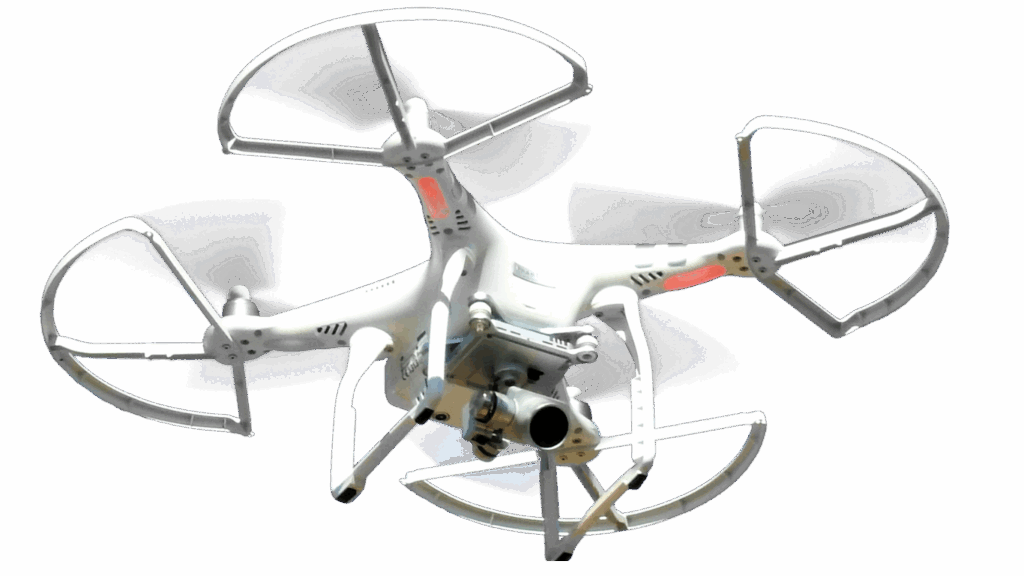
Popular Drone Used on Construction Sites

Alright, so let’s talk about the not-so-fun stuff for a second. Sure, drones are out here making construction look like a scene from a sci-fi movie, but they’re not exactly perfect. For starters, there’s the price tag. These bad boys don’t come cheap, and convincing the higher-ups to shell out for something that looks like a glorified remote-control toy can be a battle. And then there’s the learning curve—because, surprise, flying a drone isn’t as simple as playing a video game. You can’t just hand one to Bob from accounting and expect him to nail it on the first try.

Let’s not forget the tech hiccups. GPS signals can glitch, batteries don’t last forever, and the weather can be a total diva. A strong gust of wind or an unexpected downpour, and suddenly your fancy drone is doing an unplanned nosedive into a puddle. Oh, and then there’s the paperwork—because, of course, there are rules about where and how you can fly these things. It’s not exactly a “grab and go” kind of deal.

But here’s the thing: the future looks bright. Like, “wear sunglasses because it’s blindingly cool” bright. Drones in construction technology is advancing faster than your coworker heading to the donut box on a Monday morning. Prices are coming down, battery life is improving, and training programs are popping up everywhere. Soon, flying drones in construction will be as second nature as arguing over which fast-food chain has the best fries.

Even better, companies are already dreaming up wild new ways to use drones in construction. We’re talking about things like 3D printing on-site (yes, seriously), real-time data integration, and even drones that can carry heavier loads. Basically, the sky’s not the limit—it’s just the starting point. So, while there are a few bumps in the road, it’s pretty clear that drones aren’t going anywhere. Who knows? In a few years, they might be as essential to construction as hard hats and bad coffee.

Conclusion

As you can now see, there are many benefits for using drones in construction projects.  Not only do they enhance safety and save you both time and money.  They also give you high-quality footage to use in any upcoming marketing strategies. For more information on drones and ways to market you drone footage you get, be sure to read our following related articles.

Related Articles